Cap and neck geometry
Cap height, shoulder angle, lid rim and neck finish decide how the sleeve is positioned and shrunk.
Tamper-evident sleeve applicators
Specify sleeve applicator machinery for shrink bands over caps, lids, closures and necks, with tunnel and line integration support.
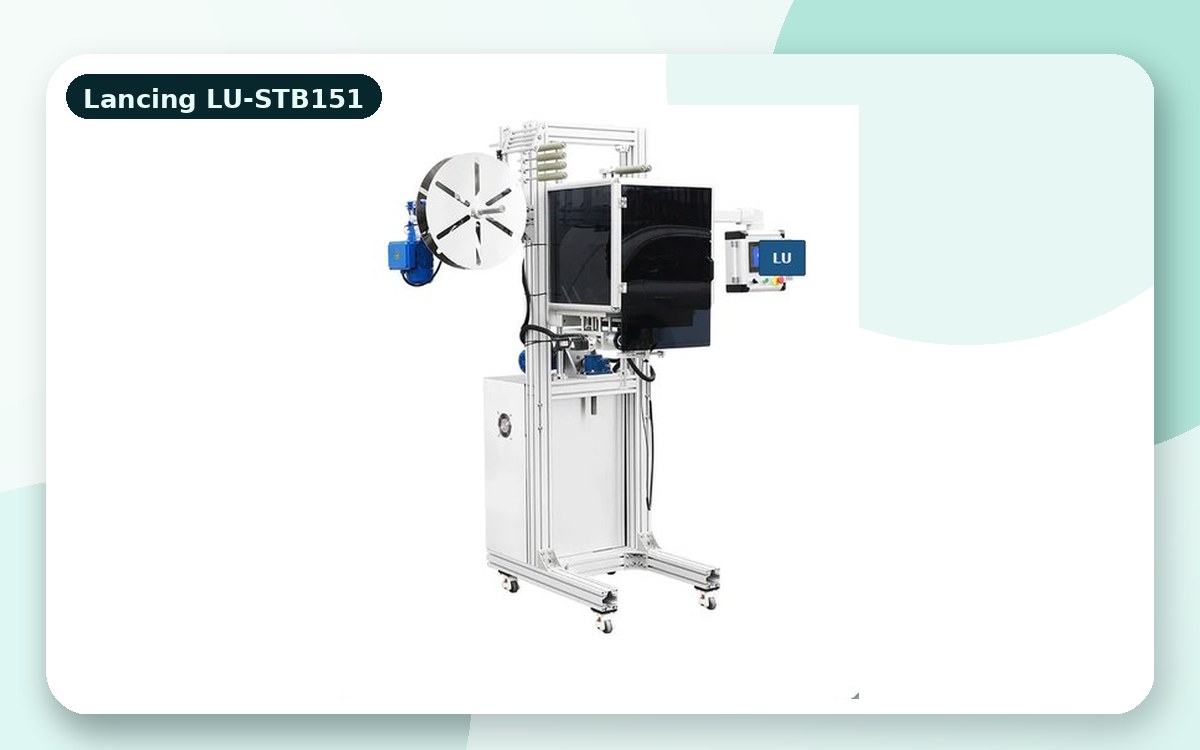
Neck bands and cap seals
Tamper-evident sleeve applicators apply a short shrink sleeve over the closure area so the finished pack shows a visible seal. They are commonly considered for jars, bottles, tubs, dropper bottles, nutritional products, cosmetics, food packs and household products.
The correct system depends on cap diameter, container neck shape, sleeve cut length, perforation requirement, container pitch and whether the seal must sit over a shoulder, lid rim or cap skirt.
Specification points
Cap height, shoulder angle, lid rim and neck finish decide how the sleeve is positioned and shrunk.
Vertical or transverse perforation may be needed so the consumer can remove the band cleanly.
Short sleeves still need controlled shrink so the seal looks neat and does not distort around the closure.
Small, light or narrow containers may need careful guiding or spacing before application.
Multiple cap diameters or SKU families should be planned early to reduce tooling and adjustment time.
The applicator may need to sit after capping and before coding, labelling, packing or inspection.
FAQ
It applies a short shrink sleeve over a cap, lid or neck area so the finished pack carries a visible security band.
Yes, many tamper-evident applications use a perforation or tear feature, but it should be confirmed when specifying the machine and sleeve.
Typically after capping or lidding and before final labelling, coding, inspection or end-of-line packing, depending on the layout.
Project support
A useful sleeve applicator shortlist starts with the real pack: container shape, sleeve lay-flat, cut length, required position, tunnel type, production speed and line layout.
Band and opening control
A tamper band is short, but its position is tightly linked to the cap, lid rim, neck finish and shoulder. Define the finished top and bottom positions on an approved pack, then work back to the unshrunk lay-flat and cut length with the sleeve supplier and applicator supplier.
The perforation is part of the consumer opening route. Its type, position and tear result should be checked on finished packs after the intended shrink process, not judged from an unshrunk tube alone.
Mark the intended top and bottom band positions on a closed production pack. Include the cap or lid variant, liner, induction seal or other component that changes the closure height or heat response.
Use a controlled finished sample as the visual reference, but also record dimensions and tolerances so acceptance is not based on appearance alone.
The perforation must remain in the intended position after cutting, placement and shrink. Check whether the cut edge intersects the perforation and whether the seam or artwork interferes with the tear route.
Retain unshrunk bands to isolate cutter or registration issues from a tunnel condition that has tightened or distorted the perforation.
This page covers tamper bands applied to individual containers. A PE film sleeve used to group bottles, cans, trays or cartons is a different process owned by Sleeve Sealers UK.
Where a pressure-sensitive tamper label is being considered instead of a shrink band, use the dedicated Lancing labelling-machine routes for the comparison.
Buyer questions
Start with the finished top and bottom positions on the closed pack, then confirm the unshrunk cut length and shrink allowance with the sleeve supplier and applicator trial.
It can be considered where the sleeve supplier and machine route support it. The position and tear result should be tested on finished packs.
Only where the pack design and finished requirement call for it. Shoulder angle can increase shrink demand and should be included in the trial.
Yes. Closures, liners, lightweight packs and heat-sensitive contents may limit the tunnel route. Confirm the pack condition after the intended process.
Normally after the closure has been applied and verified, with enough controlled spacing before the tunnel. The complete sequence should be shown on the line layout.
No. A tamper band is applied to an individual closure or neck. Multipack PE film sleeve sealing is a different machinery route.
Functional tamper evidence
A band must sit across the intended closure interface and remain secure through handling, yet open in the agreed way when the consumer removes it. Control cut length, application height, rotation and the perforation relationship to the closure.
Inspect cooled packs from start-up, steady running and restart. A visually acceptable band can still fail if the perforation is misplaced, damaged during cutting or difficult to initiate.
Tamper-band questions
Band height, shrink fit, perforation and closure behaviour have to be approved as one pack.
Measure from stable container and closure datums on the correctly fitted pack. Define the cooled top and bottom coverage and the position of any perforation relative to the opening action. Avoid references such as “just below the cap” that cannot be repeated across drawings, trials and production inspection.
Specify band height and perforation →The band may be too large, too short, poorly positioned, under-shrunk or applied across geometry that does not retain it. Container and closure tolerances can also create a loose path. Inspect the pre-tunnel position first, then the cooled fit and controlled opening result before changing several tunnel settings.
Investigate a loose band →A vertical perforation can provide a defined tear path when the intended opening action requires the consumer to split or remove the band. It is not automatically better: the line must keep it in position, it must survive normal handling and it must create the intended evidence on the actual pack. Test both unopened and opened results.
Understand tamper-evident function →Confirm the closure is correctly applied before the band is fitted, then check that the tunnel does not move or damage it. After cooling, evaluate band fit, closure function and the intended opening evidence as separate recorded checks. A visually tight band does not prove correct cap torque or seal performance.
Review the line sequence →Opening evidence
A band is tamper-evident only when the finished pack provides the intended visible indication of opening. The trial should cover the closure and band combination, including cap application, sleeve placement, shrinking, cooling and the way a user removes or opens the closure.
Band height should be measured against fixed closure and container datums. Perforation position, depth and direction must be assessed after shrinking because heat exposure and local shrink can change the tear path.
A new cap profile, torque condition, sleeve material, perforation or tunnel recipe can change opening behaviour.
Use the sample-testing guide and neck-band specification guide.
Send a tamper-band applicationClosure-system boundary
A shrink tamper band is applied around the outside of the closure and then shrunk into position. An induction seal is a compatible liner bonded at the container mouth beneath the cap. They use different equipment and provide different pack functions, so a brief that asks only for a “tamper seal” can produce an incomplete quotation.
The tamper band versus induction seal comparison explains when one or both processes may need to be reviewed and what container, closure, liner and sleeve evidence should be supplied.